
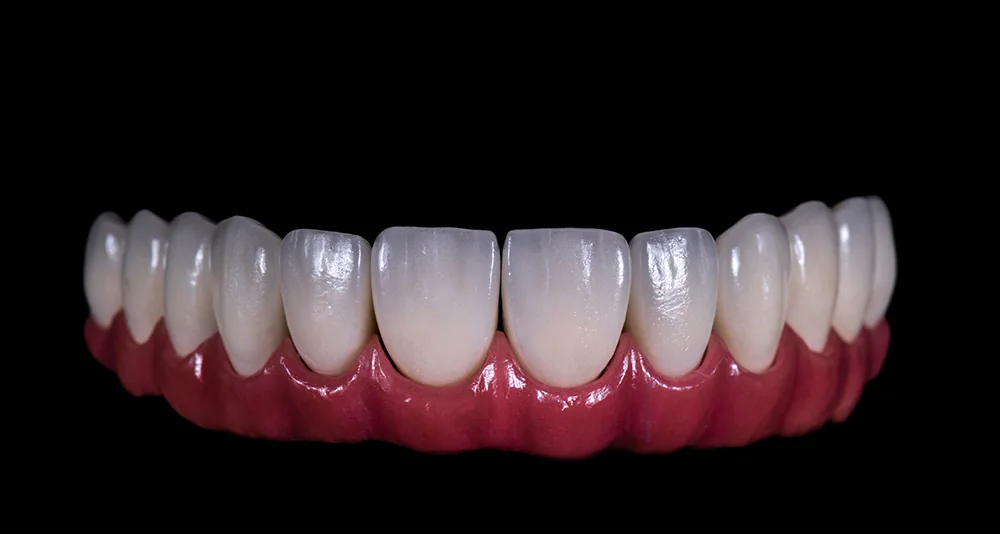
Dental implants can’t get cavities, but the gums and bone around them can still get infected. That’s why the way you clean them matters so much. To clean dental implants, brush twice a day with a soft toothbrush and a low-abrasive toothpaste, clean around and under them once a day with floss, interdental brushes or a water flosser, and get professional cleanings every 3 to 6 months.
We hear the same question from almost every patient after their dental implants or All-on-4: “How do I take care of these at home?” So here’s exactly what we tell them, step by step.
Key takeaways
- Brush twice a day with a soft or extra-soft brush and a low-abrasive toothpaste.
- Clean under and around implants once a day with implant floss, interdental brushes or a water flosser.
- Full-arch implants (like All-on-4) need extra care under the bridge, where food and plaque collect.
- Bleeding, swelling or a bad taste around an implant are signs to call your dentist.
Why Do Dental Implants Need Special Care?
An implant is a small titanium post in your jawbone, with a crown or bridge on top. The crown itself can’t decay. However, plaque still builds up around it, just like on natural teeth.
If that plaque isn’t removed, the gum around the implant can become inflamed. Over time, the infection can reach the bone that holds the implant. Dentists call this peri-implantitis, and it’s one of the main reasons implants fail. The good news is that a simple daily routine prevents most of it.
What Do You Need to Clean Dental Implants?
You don’t need anything complicated. In fact, most of these tools cost only a few dollars at any pharmacy:
- A soft or extra-soft toothbrush. Manual or electric both work; just keep the pressure gentle.
- A low-abrasive toothpaste. Avoid whitening pastes, baking soda and charcoal, because they can scratch crowns and bridges.
- Implant floss or a floss threader. Spongy “super floss” slides under bridges and around implants.
- Interdental brushes. Choose ones with a plastic-coated wire, so they don’t scratch the implant.
- A water flosser. Especially helpful for All-on-4 and other full-arch bridges.
- An end-tuft brush (a small, single-tuft brush) for the hard-to-reach spots where the bridge meets the gum.
How to Brush Dental Implants, Step by Step
- 1Angle the brush at 45 degrees toward the gum line.
- 2Use small, gentle circles on every surface of each crown, without scrubbing hard.
- 3Spend extra time where the crown meets the gum, because that’s where plaque causes trouble.
- 4Brush for two full minutes, twice a day: in the morning and before bed.
- 5Brush your tongue too, and rinse with water or an alcohol-free mouthwash.
How to Floss Around Dental Implants
Flossing is where most patients slip. Yet it’s the most important step, because the brush can’t reach the space between and under your implants.
Using implant floss
Thread the floss under the crown or bridge, wrap it around the implant in a “C” shape, and gently slide it up and down below the gum line. Then move to the next implant.
Using interdental brushes
Slide the brush gently into the gap between teeth or implants and move it back and forth a few times. Pick a size that fits snugly without forcing it.
Using a water flosser
Set it to a low or medium pressure, aim the tip at the gum line, and trace along the inside and outside of every implant and under any bridge. Many patients find it the easiest way to clean full-arch implants.
How to Clean All-on-4 and Other Full-Arch Implants
With All-on-4 or All-on-6, your new teeth are a fixed bridge that you don’t take out. As a result, food can collect underneath it, so your daily routine has one more step:
- Brush the bridge like natural teeth, twice a day.
- Once a day, clean underneath with a water flosser, moving slowly along the whole arch.
- Use super floss or an end-tuft brush where the bridge meets the gum, around each implant.
- Get professional cleanings more often; many full-arch patients come every 3 to 4 months.
During your checkups, your dentist may also remove the bridge from time to time to clean it and the implants thoroughly.
What About Snap-On Dentures?
Snap-on dentures are easier in one way: you take them out to clean them. Every day, remove the denture and brush it with a denture brush, gently brush your gums and the small attachments on the implants, and store or soak the denture as your dentist recommends.
How Often Should You Clean Your Implants?
Your dentist will tell you which schedule fits your case. Coming from the U.S.? Your local dentist or hygienist can do routine cleanings; just let them know you have implants. You can also book a professional cleaning at our clinic when you visit Tijuana.
Common Mistakes That Damage Dental Implants
- Skipping flossing because implants “can’t get cavities.”
- Using hard brushes or whitening toothpastes that scratch crowns and bridges.
- Using metal tools, like bare-wire brushes or toothpicks, around the implant.
- Smoking, which slows healing and raises the risk of implant failure.
- Chewing ice, pens or very hard foods, which can chip crowns.
- Skipping checkups, so small problems go unnoticed.
Signs Your Implant Needs Attention
Call your dentist if you notice any of these around an implant:
- Bleeding when you brush or floss
- Red, swollen or tender gums
- A bad taste, bad breath or pus
- An implant or crown that feels loose
- Pain when you chew
Caught early, most of these problems are easy to treat. If you had your implants with us, message your patient coordinator on WhatsApp and we’ll help you right away.
Caring for Implants Right After Surgery
The first weeks after surgery are different from daily care. Your gums need time to heal, so follow the written instructions your dentist gives you, especially about rinsing, brushing near the surgery area and what to eat. Then, once your dentist clears you, start the daily routine in this guide.
Thinking about dental implants?
Send us your X-rays and get a free written plan. A complete implant at our Tijuana clinic is $1,899.
Frequently Asked Questions
How do you clean dental implants?+
Brush twice a day with a soft toothbrush and a low-abrasive toothpaste, and clean around and under your implants once a day with implant floss, interdental brushes or a water flosser. Then get professional cleanings every 3 to 6 months.
Can I use a regular toothbrush on dental implants?+
Yes, as long as it’s soft or extra-soft. Electric toothbrushes work well too. Just avoid hard bristles and heavy pressure, because they can irritate the gums and scratch crowns.
Is a water flosser good for dental implants?+
Yes. A water flosser is especially helpful for All-on-4 and other full-arch bridges, because it reaches underneath them. Many patients use it together with floss or interdental brushes.
What toothpaste is best for dental implants?+
A low-abrasive, non-whitening toothpaste. Whitening pastes, baking soda and charcoal can scratch the surface of crowns and bridges over time.
How often should implants be professionally cleaned?+
Usually every 3 to 6 months. Many patients with full-arch implants, like All-on-4, need cleanings every 3 to 4 months. Your dentist will recommend the right schedule for you.
Can dental implants get infected?+
Yes. Plaque around an implant can inflame the gum and, over time, damage the bone that holds it. This is called peri-implantitis. Daily cleaning and regular checkups prevent most cases.
Can my dentist at home clean my implants?+
Yes. Your local dentist or hygienist can do routine cleanings and checkups. Just tell them you have implants, so they use the right tools.
